.svg)

Amazon FBA Product Sourcing from China: The Complete Step-by-Step Guide for Sellers

.svg)
Amazon FBA Product Sourcing from China: The Complete Step-by-Step Guide for Sellers
Published: 24 April 2026 | Category: Industry Knowledge | Reading time: 10 min
Amazon FBA (Fulfilment by Amazon) has transformed the way entrepreneurs build product businesses. Instead of managing warehouses and shipping logistics, sellers send their inventory to Amazon’s fulfilment centres and let Amazon handle the rest — storage, picking, packing, and delivery.
But there is one part of the FBA model that Amazon does not handle for you: finding the right product and getting it made. That responsibility falls entirely on the seller — and for most successful FBA businesses, it means sourcing from manufacturers in China.
This guide walks you through the complete process of sourcing products for Amazon FBA from China — from product research and supplier discovery through to quality control, FBA prep, and the decision of whether to go direct or work with a professional sourcing partner.
Why Sellers Source from China for Amazon FBA
China remains the world’s dominant manufacturing hub — and for Amazon FBA sellers, the economics are straightforward. Manufacturing costs in China are typically 40–70% lower than equivalent production in the United States or Europe. Combined with the country’s deep manufacturing expertise, extensive supplier networks, and fast production cycles, China allows sellers to build differentiated products at margins that make FBA profitable.
Beyond cost, Chinese manufacturers offer a level of flexibility that is difficult to match elsewhere. Whether you need custom packaging, private label branding, or a completely original product design, factories across Guangdong, Zhejiang, and Fujian provinces are experienced in accommodating small-to-medium brands at every stage of growth.
Step 1: Product Research — Find What Is Worth Sourcing
Before approaching any supplier, you need to know exactly what you want to source and why. Product research is the foundation of every successful FBA launch, and it determines whether your China sourcing investment will generate a return.
Use Amazon’s Best Sellers lists, category browsing, and keyword research tools such as Jungle Scout or Helium 10 to identify products with consistent demand, manageable competition, and healthy margins. Look for items priced between $20 and $80 USD, with fewer than 300 reviews on the top listings, and no dominant brand controlling the category.
Once you have identified a product opportunity, get specific. Know the exact dimensions, weight, materials, colour options, and any relevant certifications (such as CE marking for Europe or FCC for the United States) before you contact a single supplier.
Step 2: Find Suppliers on Alibaba and Beyond
Alibaba remains the most widely used platform for finding Chinese manufacturers, but it should not be your only source. Here’s how to approach supplier discovery strategically.
On Alibaba, use specific product keywords and filter for Trade Assurance suppliers with Gold Supplier status and verified audits. Focus on manufacturers, not trading companies — look for suppliers whose product listings align closely with your item, and whose factories appear in audit reports.
Beyond Alibaba, consider Global Sources (particularly strong for electronics and consumer goods), Made-in-China.com, and direct referrals from sourcing agents or industry contacts. For private label products, Canton Fair — held twice a year in Guangzhou — remains one of the most effective places to meet manufacturers in person and assess their capabilities directly.
Step 3: Vet Your Shortlisted Suppliers
Once you have a shortlist of five to ten potential suppliers, vet them carefully before committing to samples. Request the following from each supplier:
- Business licence and export licence
- Factory audit report (conducted by SGS, Bureau Veritas, or similar)
- Product certifications relevant to your target market
- References from existing international clients
- Photos or video of the production facility
Pay attention to how quickly and clearly each supplier communicates. Response speed, accuracy of answers, and willingness to provide documentation are all indicators of how easy they will be to work with over the long term.
Step 4: Request Samples Before Committing to Production
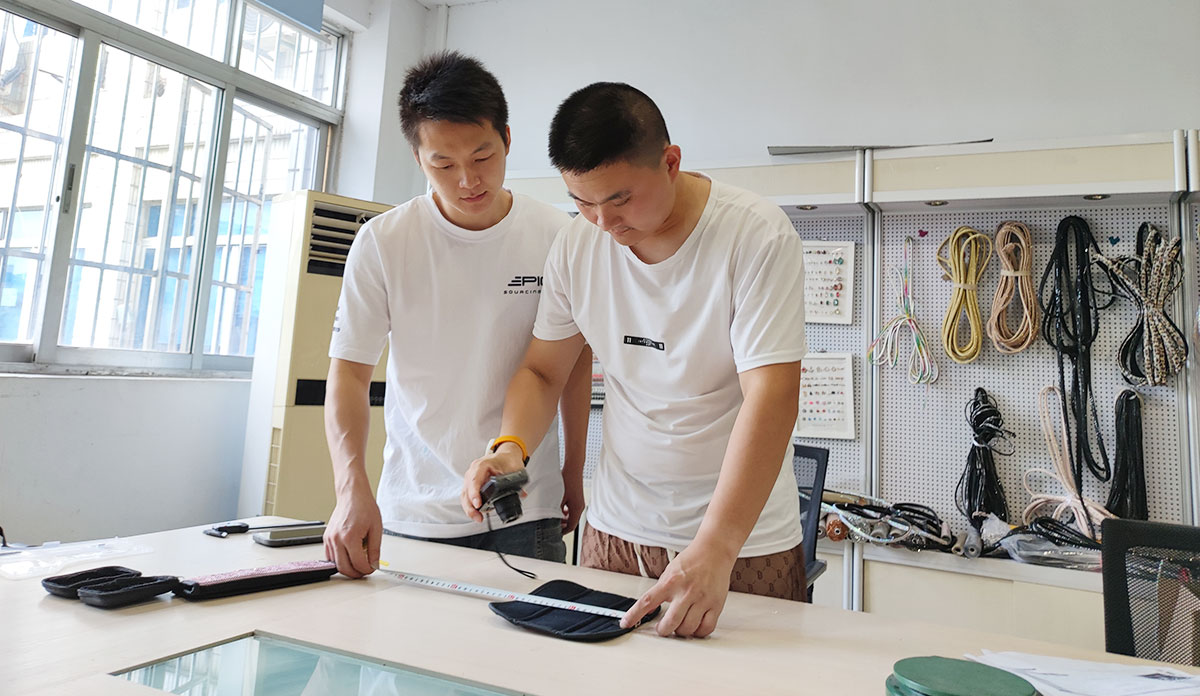
Never place a bulk order without physically evaluating samples. Request samples from your top two or three shortlisted suppliers and assess them against your product specification sheet.
Evaluate each sample for build quality, materials, finish, accuracy to your specifications, and packaging. Test the product as your customer would — identify anything that would generate negative reviews on Amazon. If modifications are needed, communicate them clearly and request revised samples before proceeding.
Sample costs are typically between $50 and $300 USD per supplier and are often refundable or credited against your first order. Do not skip this step to save money — the cost of a bad bulk shipment far exceeds any saving on samples.
Step 5: Negotiate Terms, MOQ, and Pricing
Once you have identified your preferred supplier, negotiate before placing your order. Key terms to discuss include:
- Unit price: Request tiered pricing at different order quantities and push back on the first quote. Most suppliers build negotiation room into their initial pricing.
- MOQ (Minimum Order Quantity): For a first order, aim to negotiate the MOQ down to a test quantity — often 200 to 500 units for most consumer goods.
- Payment terms: Standard is 30% deposit, 70% balance before shipment. Once a relationship is established, some suppliers offer extended terms.
- Lead time: Confirm production and shipment lead times in writing. Factor in Chinese public holidays — particularly Chinese New Year in January or February — which can add weeks to timelines.
Step 6: Quality Control Before Shipment
Quality control (QC) is non-negotiable for Amazon FBA sellers. A product that fails on arrival or generates negative customer reviews can destroy a listing’s ranking before it gains traction.
There are three standard QC approaches:
- Pre-production inspection: Checks that raw materials meet specification before manufacturing begins.
- During-production inspection: Conducted when 20–80% of goods are complete, catching defects early enough to correct them.
- Pre-shipment inspection (PSI): The most common — a third-party inspector checks the finished goods against your spec sheet before they leave the factory. This is strongly recommended for every order.
Professional QC inspections through companies such as QIMA, SGS, or Asia Quality Focus cost approximately $200–$350 USD per inspection and provide detailed reports with photos.
Step 7: FBA Prep and Logistics
Amazon has specific requirements for how goods must be packaged, labelled, and shipped to its fulfilment centres. Before your goods leave China, ensure the following:
- Each unit has an FNSKU barcode label applied correctly
- Carton dimensions and weights meet Amazon’s packing requirements
- Poly bags (where required) include suffocation warning labels
- Shipment documentation is accurate and complete
Many sellers use a third-party FBA prep centre — either in China or in a destination country — to handle labelling and packaging before goods are forwarded to Amazon. This adds cost but ensures compliance and reduces the risk of receiving penalties or rejected shipments.
For shipping, most FBA sellers use a combination of sea freight (for larger, lower-cost-per-unit shipments) and air freight or express courier (for smaller, time-sensitive shipments or product launches). Work with a licensed freight forwarder who has experience with Amazon FBA shipments.
Should You Work with a Sourcing Agent?
Sourcing from China directly requires time, experience, and reliable contacts. For sellers who are new to the process or managing multiple SKUs, a professional sourcing agent can significantly reduce risk and workload.
A good sourcing agent will handle supplier identification and vetting, sample coordination, price negotiation, production follow-up, quality control, and logistics coordination on your behalf. They typically charge a sourcing fee of 5–15% of the order value, or a fixed fee per project.
Epic Sourcing works with Amazon FBA sellers across New Zealand, Australia, the UK, and globally, managing the entire sourcing process from product brief to delivery. If you are scaling your FBA business and want experienced support on the ground in Asia, get in touch to discuss your sourcing needs.
Final Checklist Before Your First FBA Shipment from China
- Product research completed — validated demand, competition, and margin
- Supplier vetted — documents, audits, references reviewed
- Samples received, tested, and approved
- Order terms negotiated and confirmed in writing
- Pre-shipment inspection conducted and passed
- FBA prep completed — FNSKU labels, packaging compliant
- Freight forwarder engaged and shipment booked
Sourcing from China for Amazon FBA is a learnable, repeatable process. The sellers who succeed are those who treat it as a system — built on solid supplier relationships, consistent quality control, and efficient logistics.
Related Articles
Let’s Make It Epic
We're here to make sourcing simple, and a whole lot less stressful.
We are experiencing a higher volume of enquiries than usual. Our standard reply time for form submissions and emails is within 72 hours.
If your matter is urgent, please schedule a video call using the link below.