

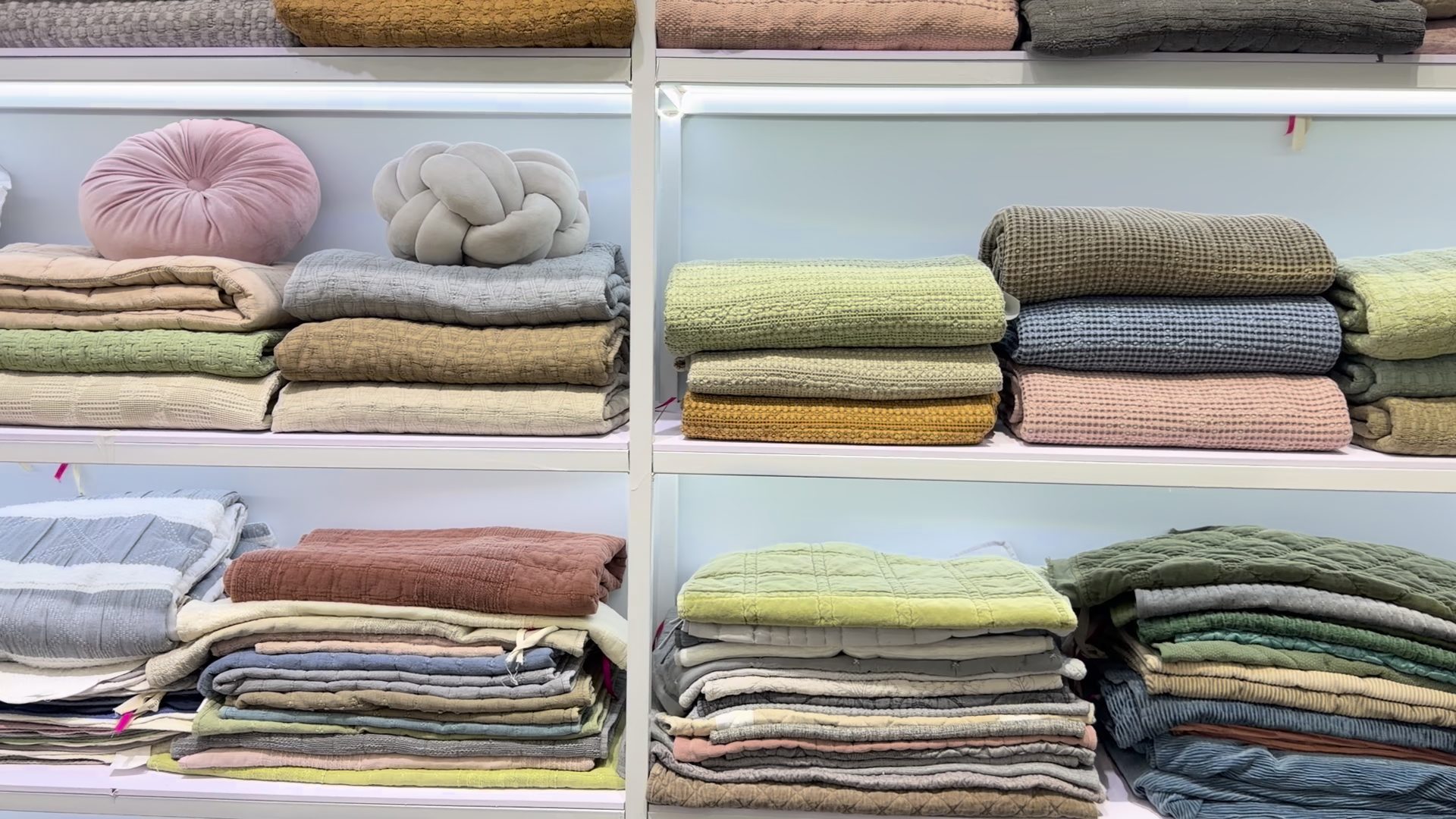
Towel Fabric Guide: Cotton, Bamboo Viscose, Microfiber, and GSM Explained


Last updated: November 16, 2026
In short: Cotton terry is the usual choice for a bath towel. Microfiber is common for sport and cleaning. A flat-weave peshtemal is a towel style, not the same thing as Turkish cotton, and is popular for the beach and for travel. Pick the GSM, or the fabric weight, based on the use: lighter for the gym or a packable beach towel, heavier for a plush hotel bath sheet.
This sits alongside our guide to blanket material types, which is about blankets, not towels.
What are the main towel fabrics?
Cotton is the default bath fiber. Mills often describe it as ring-spun, combed, or long-staple. Ring-spun is a spinning method. Combed describes fiber prep before spinning, which removes shorter fibers. Long-staple describes the length of the cotton fibers. One yarn can be all three. Ask the mill for the yarn type, not only the word "cotton."
Turkish cotton and Egyptian cotton are origin descriptions often associated with long-staple cotton. The origin name alone does not tell you the staple length. If you want those names on a label, ask for origin proof and check the labeling rules in your market.
Towels sold as "bamboo" are often viscose or rayon made from bamboo, sometimes blended with cotton. They are often sold as soft and absorbent. Approve a washed sample, and read the labeling section below before you name the fiber.
Microfiber towels are commonly polyester and polyamide blends, and some are 100% polyester. Sport and travel versions are often light and compact. Cleaning and car-detailing versions range from thin cloths to dense, plush towels. Linen is used for kitchen, hand, and bath towels. Lightweight and waffle-weave linen towels are often described as quick-drying, but approve a sample.
What does GSM mean, and which weight should you pick?
GSM means grams per square meter. It is the weight of the fabric, not the size of the towel. A higher GSM usually feels heavier and plusher. A lower GSM usually feels lighter and dries faster. Construction and fiber also change the feel, so GSM alone does not tell you plushness or absorbency. No single number is right for every brand. Lock the GSM you approved on the spec, and check it on incoming goods.
Which weave suits which towel?
Terry loop is the classic bath towel weave, with loops of yarn standing off the surface. Zero-twist terry uses untwisted pile yarns, and low-twist terry uses lightly twisted ones. They can feel soft and absorb well, but they may lint more and be less durable than higher-twist terry, so test them after washing.
Waffle weave has raised ridges around recessed cells. It is often thinner and lighter than plush terry, but set the actual weight with a GSM spec. It suits a gym or kitchen towel. Velour is made by shearing the terry loops on one face, so that side looks smooth and takes a print well. It is one option for a printed beach towel.
Flat weave has no pile. A traditional peshtemal is a thin, flat-woven towel that packs small and is often marketed as quick-drying. "Turkish towel" is a looser nickname, so write "traditional peshtemal" on the spec when you mean flat weave. Either way, it is a style, not the same thing as "Turkish cotton."
Which towel material is best for each use?
| Use | A practical starting point |
|---|---|
| Bath | Cotton terry, in a medium to heavy weight approved on a sample |
| Hotel | A plush cotton terry bath sheet, with a hem and a hanging loop |
| Gym | A lighter waffle or terry cotton, or a microfiber sport towel |
| Beach | A lightweight flat-weave peshtemal, or a velour-face printed beach towel |
| Kitchen | Cotton terry or linen, in a lighter weight, with a hanging loop |
| Car detailing | Microfiber, in a blend the detailer has tested on paint and glass |
| Kids' hooded towels | Soft cotton terry, with the hood and the after-wash size on the spec |
For other home textiles, see how to source bedding and homewares from Asia and how to source home goods and homewares from China.
Is your towel mill or factory who it says it is?
Get a supplier verification report before you pay a deposit.
Get your supplier verifiedHow do you source custom or private label towels?
Write a clear spec before you ask for a quote. Your product specification sheet should cover:
- Fiber and yarn, for example combed cotton, a cotton-viscose blend, or a polyester-polyamide microfiber
- The approved GSM and tolerance
- The length and width after washing
- A Pantone or physical color standard
- The logo method, such as embroidery, a jacquard weave, or a print
- The hem and hanging loop
- The packaging
See how much product samples cost when you request samples. If the mill quotes a minimum, see what MOQ means and how to negotiate it. We don't set minimums ourselves; the mill sets its own, and we negotiate a starting quantity that suits your budget.
If you are building your own towel line, look at our private label service, the CUSTOMISER Private label package. To add your brand to a towel a factory already makes, look at white label, the Importer White label package. Printed tea towels are a typical starting point for that path. Current fees are on our pricing page.
What tests should towels pass?
Ask for tests that match the towel's use, then repeat a few on bulk goods. Common ones are absorbency, shrinkage after washing, colorfastness, lint and pilling, and a GSM check on arrival against the approved weight. For a harmful-substance check, ask for a current STANDARD 100 by OEKO-TEX certificate whose scope covers the towel you are buying, including its materials, colors, and finishes. STANDARD 100 certifies products, not mills, so don't assume a mill's certificate covers every towel it makes. Check the certificate number through OEKO-TEX Label Check. A pre-shipment inspection against your AQL plan can help catch weight, size, and workmanship issues before goods ship.
What labeling rules should you watch in the US?
Fiber content has to be labeled. Be careful with the word "bamboo." Under US FTC textile rules, a towel made from rayon or viscose derived from bamboo must name the fiber as rayon or viscose, for example "viscose made from bamboo," not simply "bamboo." A correct fiber label doesn't fix a plain "bamboo" claim elsewhere in the title, packaging, or listing. Origin claims such as "Egyptian cotton" or "Turkish cotton" are a separate matter. They must be truthful and supported, and must not misstate the cotton types or the mix. Keep them apart from the country-of-origin label for where the towel was made. Our team can help you turn a towel idea into a clear spec, compare samples from shortlisted mills, and arrange checks before goods ship.
FAQs
Is bamboo viscose or cotton better for towels?
Neither is better in every case. Cotton terry is the usual bath standard. Towels of viscose made from bamboo are often sold as soft and absorbent, but the fiber, blend, and weave all change the result. Approve washed samples of both.
What GSM is a good bath towel?
It depends on the feel you want. A lighter towel dries faster and packs smaller. A heavier towel feels plusher. Approve a sample, lock that GSM on the spec, and check it on incoming goods.
Why do new towels shed lint?
New cotton terry towels may release loose fibers and manufacturing lint in their first few washes. This often eases with washing, but how much and for how long depends on the yarn and construction. If shedding stays heavy, check the yarn, the weave, and the mill's finishing.
Are Turkish towels the same as Turkish cotton towels?
No. A traditional peshtemal, often sold as a Turkish towel, is a thin flat-weave style that packs small. Turkish cotton is a fiber origin, used in terry or flat weave. A peshtemal is not always made from Turkish cotton, and a terry bath towel can be.
Can I put my logo on towels?
Yes. Common methods are embroidery, a jacquard weave, and print, including on a velour-face beach towel. Approve a sample of the mark on the towel itself, not a logo on a scrap. Start with a sample request, then our pricing page.
Want help locking your towel fabric and GSM before production?
Talk through your fiber, weave, and mill shortlist with Epic Sourcing.
Book a free discovery chatRelated Articles


Let’s Make It Epic
We're here to make sourcing simple, and a whole lot less stressful.
We are experiencing a higher volume of enquiries than usual. Our standard reply time for form submissions and emails is within 72 hours.
If your matter is urgent, please schedule a video call using the link below.
